You Can't Always Get What You Want by The Rolling Stones
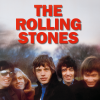
"You Can't Always Get What You Want" is one of the most celebrated and enduring songs by the legendary British rock band The Rolling Stones. Released in 1969, the song is a powerful, gospel-influenced rock composition that explores the difference between what people desire and what they actually need. Its famous message suggests that life does not always deliver what we want, but that patience, experience, and perseverance can sometimes lead us toward something more meaningful.
Written by Mick Jagger and Keith Richards, the song combines philosophical lyrics, social commentary, soulful vocals, acoustic guitar, piano, orchestral elements, and a magnificent choral arrangement. Its gradual musical development builds from a reflective, almost spiritual opening into a sweeping and emotionally powerful rock anthem.
The song originally appeared on the Rolling Stones' 1969 album Let It Bleed, where it serves as the closing track. It has become one of the band's signature recordings and is widely regarded as one of the greatest rock songs ever written.
Background and Songwriting
The song was written by Mick Jagger and Keith Richards during one of the most creatively productive periods in the Rolling Stones' career. The two musicians were developing a more sophisticated musical approach that incorporated influences from American blues, country, folk, gospel, and traditional rock and roll.
Mick Jagger originally developed the song on an acoustic guitar. Rather than beginning as a conventional rock composition, it started as a relatively simple, reflective piece that gradually evolved into a much larger musical production.
The lyrics reflect observations about relationships, political demonstrations, social gatherings, personal disappointments, and the uncertainties of everyday life. Jagger uses several loosely connected scenes to explore the frustrations and contradictions of the human experience.
The central message is deliberately open to interpretation. It can be understood as a statement about accepting life's limitations, recognizing what truly matters, or learning that happiness does not always come from obtaining everything we desire.
Recording History
The Rolling Stones began recording the song in November 1968 at Olympic Sound Studios in London, England. The recording sessions took place during the transitional period between the band's Beggars Banquet and Let It Bleed albums.
The song was recorded in stages, with the final arrangement developing into an ambitious production featuring a gospel choir, multiple instrumentalists, and an unusually expansive musical structure.
Producer Jimmy Miller played an important role in shaping the recording. Interestingly, Miller also played drums on the track instead of the band's regular drummer, Charlie Watts.
The song's opening features the distinctive sound of the London Bach Choir. The choir provides an almost church-like atmosphere that immediately separates the recording from a conventional Rolling Stones rock song.
The recording combines acoustic and electric instrumentation with piano, organ, French horn, percussion, bass, drums, and multiple backing vocalists. The arrangement gradually expands, giving the song a dramatic and emotionally uplifting quality.
Let It Bleed is considered one of the Rolling Stones' greatest albums. Other well-known songs on the record include "Gimme Shelter," "Love in Vain," "Country Honk," "Live with Me," "Let It Bleed," "Midnight Rambler," "You Got the Silver," and "Monkey Man."

Musicians and Recording Personnel
The recording features members of the Rolling Stones alongside several talented guest musicians and vocalists.
- Mick Jagger: Lead vocals.
- Keith Richards: Guitar and backing vocals.
- Bill Wyman: Bass guitar.
- Jimmy Miller: Drums.
- Al Kooper: Piano, organ, and French horn.
- Rocky Dijon: Congas, maracas, and percussion.
- Madeline Bell: Backing vocals.
- Doris Troy: Backing vocals.
- Nanette Newman: Backing vocals.
- The London Bach Choir: Choral vocals.
- Jack Nitzsche: Choral arrangement.
One particularly interesting contribution came from American musician Al Kooper, who played piano, organ, and French horn. His French horn introduction is one of the recording's most recognizable musical features.
The London Bach Choir provides the distinctive choral opening and returns throughout the composition, helping create the song's powerful gospel-inspired atmosphere.